
Coastal ADUs: How to Get Your Permit in Record Time
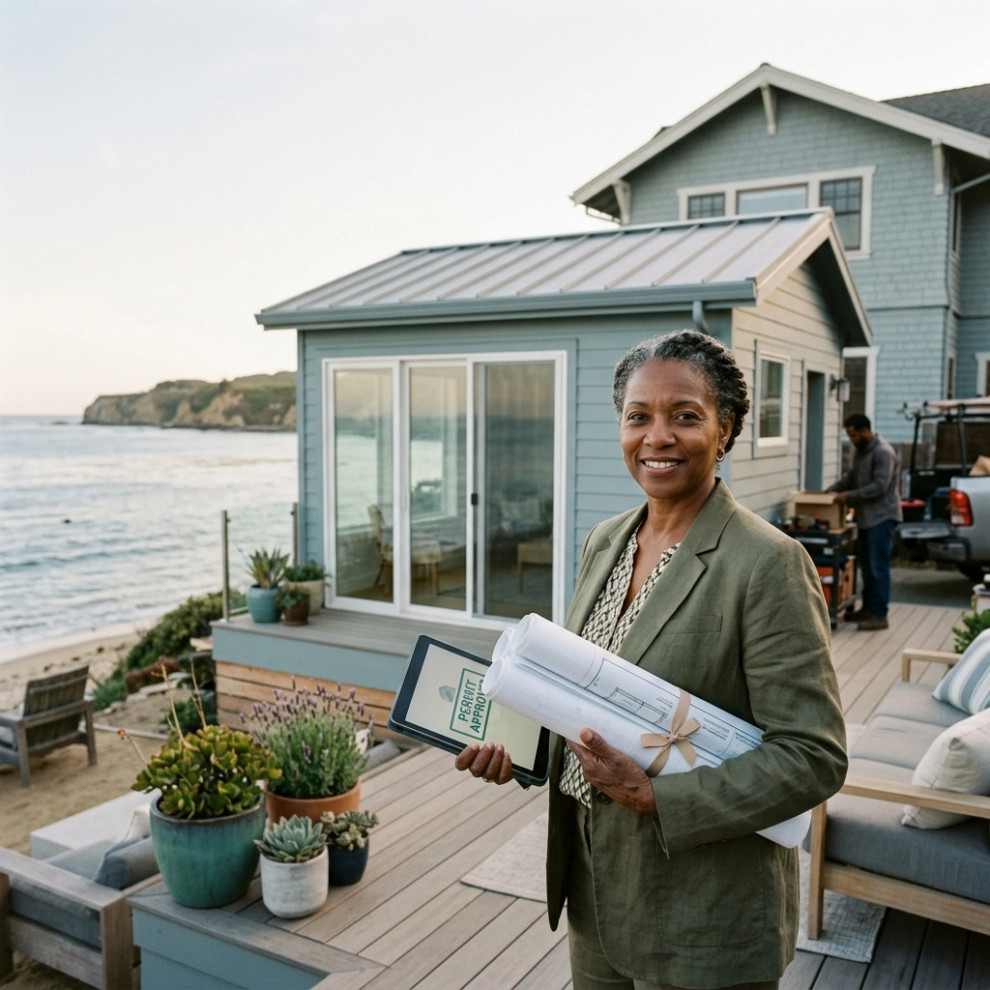
Building an Additional Dwelling Unit (ADU) along the California coast feels like a dream: until you see the paperwork. The allure of the Pacific breeze and the sound of the waves are often countered by the rigorous regulations of the California Coastal Commission. We understand that for many homeowners in Los Angeles and San Diego, the prospect of navigating these extra layers of permitting can feel overwhelming.
At COLEMAN BUILD LLC, we’ve walked this path many times. We know that while the "Coastal Zone" adds a layer of complexity: a term that often sends shivers down the spine of property owners: it doesn't have to be a barrier to your goals. Whether you are looking to house an aging parent, create a rental income stream, or build a private guest suite, getting your permit in record time is all about strategy, foresight, and understanding the local landscape.
Why the Coastal Zone Changes Everything
If your property falls within the designated Coastal Zone, you aren't just dealing with your local city’s building department. You are also subject to the California Coastal Act, which was designed to protect the state’s natural resources and public access to the shoreline. This means your ADU project may require a Coastal Development Permit (CDP) in addition to your standard building permits.
The difference in timelines can be stark. In Los Angeles County, for instance, a typical ADU permit might take around 147 days outside the Coastal Zone, but that jumps to an average of 260 days within it. In Orange County, the gap is even wider. However, there is a silver lining for our San Diego clients. Historically, San Diego has maintained a much tighter timeline, with very little difference between coastal and non-coastal approval times. Knowing these regional nuances allows us to set realistic expectations from day one.

The Secret Weapon: Ministerial Approval (Process One)
The fastest way to get your coastal ADU approved is to qualify for what is known as "ministerial approval" or a Process One CDP. This is essentially a "check-the-box" process where, if you meet specific criteria, the city can approve your permit without a public hearing or the lengthy discretionary review process.
How do you qualify for this fast track? In San Diego and many parts of LA, your project often needs to meet these specific "Safe Harbor" conditions:
- The ADU must be located more than 50 feet from a coastal bluff edge.
- The structure should be over 300 feet inland from the mean high tide line.
- The project must not involve the removal of significant native vegetation within 100 feet of a bluff.
- The design cannot encroach on existing public coastal access ways.
If we can design your ADU to stay within these bounds, we can often bypass the most time-consuming parts of the coastal review. This turns a multi-year headache into a streamlined project that gets you into construction months earlier.
Strategic Design Choices for Speed
When speed is the priority, the type of ADU you choose matters immensely. While a detached, two-story backyard cottage is beautiful, it might trigger more scrutiny than a conversion.
Interior Conversions: Converting an existing garage or a portion of your main home into an ADU is often the quickest path. Since the "envelope" of the building isn't changing, these projects are frequently exempt from a full CDP review. This is a fantastic option for homeowners who want to start generating rental income or move a family member in as quickly as possible.
Attached ADUs: Building an addition that is physically attached to your primary residence can sometimes be easier to permit than a standalone structure. It often falls under different zoning interpretations that can simplify the coastal review process.
Pre-Approved Plans: Some coastal municipalities offer "pre-approved" ADU plans. While you still have to deal with site-specific coastal requirements, having the structural and architectural components already vetted by the city can shave weeks off the initial review phase.
The Power of Parallel Processing
One of the biggest mistakes we see homeowners make is treating the permitting process like a relay race: waiting for one department to finish before starting with the next. At COLEMAN BUILD LLC, we favor a "parallel processing" approach.
Coastal zone review often happens in tandem with the building department’s structural review. By submitting our applications simultaneously and maintaining constant communication with both the city planners and the Coastal Commission staff, we ensure that no time is wasted. If the Coastal Commission has a question about your foundation’s impact on drainage, we address it while the building department is still reviewing your electrical plans. This proactive management is how we achieve "record time" results.
Before you dive in, it’s worth reviewing what are the 7 mistakes you’re making with your ADU permit application and how can you fix them to ensure your initial filing is as clean as possible
Navigating the San Diego and LA Context
Every city interprets coastal rules slightly differently. In San Diego, the city has a "Local Coastal Program" (LCP) that has been certified by the state. This means the city handles most of the heavy lifting themselves, which is why their timelines are often shorter.
In parts of Los Angeles, the process can feel more fragmented. You might find yourself caught between different interpretations of height limits or "view corridor" protections. Our team focuses on "View-Neutral" designs: ensuring that your new ADU doesn't block a neighbor’s glimpse of the ocean. By being a "good neighbor" in the design phase, we significantly reduce the risk of appeals, which are the primary cause of long-term project delays.

Avoiding the Pitfalls That Cause Delays
Even a perfectly designed project can be sidelined by small, technical errors. Here are a few things we watch out for to keep your project moving:
- Unpermitted Existing Space: If you are converting a garage that was previously modified without permits, we need to address that upfront. Trying to "hide" unpermitted work is a guaranteed way to trigger an audit that can stall your project for a year.
- Utility Separations: In some coastal areas, the requirements for new water or sewer lines are more stringent to prevent environmental runoff. We always recommend checking utility capacity early. You can learn more about the complexities of living on-site during these transitions in our post on whether you can live in your ADU while rebuilding your main home.
- Incomplete Documentation: A single missing signature or an incorrectly scaled site plan can result in a "Notice of Incomplete Application." This resets your 60-day statutory clock. We double-check every document before it hits the reviewer's desk.
The Benefit of Expertise
The California ADU laws are constantly evolving, often in favor of the homeowner. Recent legislation has pushed local governments to process ADU applications within 60 days. While the Coastal Zone provides some exceptions to this rule, the overall trend is toward faster, more ministerial approvals.
By staying on top of these legislative shifts, we can often find new "loopholes" or streamlined paths that didn't exist even six months ago. For instance, the rise of multifamily ADUs has opened up new wealth-building opportunities for property owners who thought they were limited to just one secondary unit.

Creating a Legacy in the Coastal Zone
At the end of the day, the permitting process is just a means to an end. The goal is to create a space that enhances your life and increases your property value. We believe that a well-designed ADU should feel like a natural extension of your home: a place where a Black American family can gather for a Sunday brunch or where a college student can find their independence while staying close to home.
Coastal living is about beauty and harmony. Your ADU should reflect that, with intentional finishes, thoughtful light placement, and a seamless flow between indoor and outdoor spaces. When we handle the stress of the permits, you are free to focus on the fun parts: choosing the flooring, the cabinetry, and the colors that will make your new space feel like home.
If you’re ready to see what’s possible on your coastal lot, we invite you to explore our services or browse our recent projects to get inspired. The path to a coastal ADU doesn't have to be a marathon; with the right team and a clear strategy, it can be a well-paced sprint to the finish line.
When you’re ready to take the next step toward your coastal dream, feel free to reach out to us. Let’s build something beautiful together, in record time.