
LA Just Hit a Record 10,000+ ADUs in One Year: Here's What That Means for Your Backyard
Los Angeles County just reached a milestone that would have seemed unlikely only a few years ago: approximately 10,230 accessory dwelling units were completed in 2025. According to the USC Lusk Center for Real Estate, ADUs represented about 37% of all new housing units certified for occupancy across the county that year.
That is a remarkable shift. But what does it mean for you if you are considering a garage conversion, backyard cottage, addition, or other ADU on your Los Angeles property?
Could your unused garage become a comfortable home for a parent? Might a detached unit create rental income or give an adult child a private place to live? We believe the record offers encouragement, but it also makes careful planning more important than ever.
First, Understand What the Record Number Means
The headline is powerful, but the details matter.
The 10,230 figure refers to ADUs completed in Los Angeles County, not 10,000 permits issued by the City of Los Angeles in a single year. “Completed” generally means the units received the approvals necessary to be occupied, while a permit represents an earlier step in the process.
Those numbers tell us three important things:
- ADU construction has become a major part of Los Angeles housing growth.
- Many homeowners are finding ways to add housing without purchasing another property.
- The project timeline often stretches across multiple years: from early planning through design, permitting, construction, and final approval.
The USC report also found that ADU completions increased from approximately 1,624 units in 2018 to more than 10,000 in 2025. That is more than a sixfold increase in seven years.
The City of Los Angeles is part of this larger trend, but countywide figures include many jurisdictions with their own rules, review processes, and requirements. Your property’s exact location- whether it is in the City of Los Angeles, an unincorporated area, or another city within the county- can affect what may be possible.
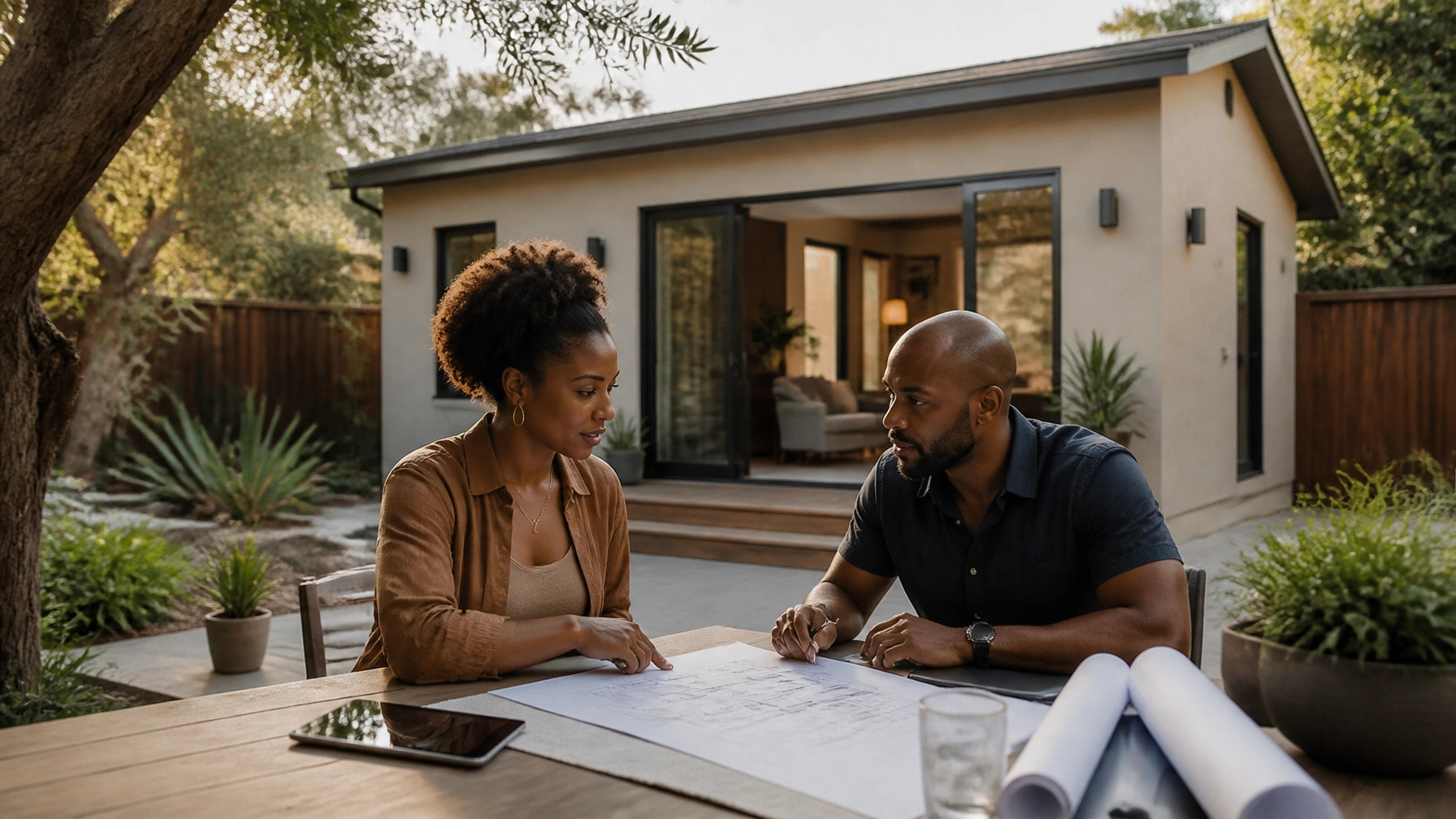
1. The ADU Boom Shows That Your Property May Have Untapped Potential
A record number of completed ADUs does not mean every Los Angeles lot is ready for construction. It does show that the concept is becoming more practical and familiar for homeowners, designers, builders, and local agencies.
Many properties have underused areas that could serve a new purpose, including:
- A detached garage that is rarely used for parking
- A long side yard with room for a compact addition
- A workshop that could be converted into living space
- A basement or lower-level area with the right conditions
- An oversized backyard that could accommodate a detached unit
- An interior portion of the home that can be thoughtfully carved out
For example, a garage conversion might create a one-bedroom apartment for a grandparent, while a new detached ADU could offer a young adult more independence without moving far from family. An addition, sometimes called a bump-out ADU, may provide a balanced solution when the existing structure and lot layout make a fully detached unit less suitable.
The first step is not choosing finishes. It is understanding your property.
We typically begin by looking at the existing structures, access points, utilities, grading, setbacks, parking conditions, and the way your family hopes to use the space. This early assessment can help you avoid falling in love with a design that does not fit your site.
2. More Homeowners Are Treating ADUs as Flexible Family Infrastructure
ADUs are often discussed as rental properties, but their value can be much broader.
For Los Angeles families, an ADU may become:
- A private suite for aging parents
- A comfortable home for a relative or close friend
- A transitional space for a young adult
- A quiet work-from-home environment
- A guest residence
- A long-term rental
- A place for a caregiver or household support
The design can change as your needs change. That flexibility may be one reason ADUs have grown so quickly in Los Angeles.
A well-planned unit can support both privacy and connection. Your parent might have a private entrance, kitchen, and bathroom while remaining close enough for regular meals and everyday support. Your adult child might have room to study, work, or save for a future home while still participating in family life.
We explored this balance in our article on designing homes that celebrate Black excellence and multigenerational living. The goal is not to squeeze another person into your existing home: it is to create a welcoming space with dignity, comfort, and purpose.
3. The Best ADU Design Starts with the Person Who Will Live There
Start with the intended resident.
A unit for an aging parent may need a different layout than one designed for a tenant or young professional. Consider how the space should function today and how it might serve your household five or ten years from now.
For an aging-in-place ADU, you might consider:
- A step-free entry
- Wider, comfortable doorways
- Lever-style cabinet and door handles
- A curbless or low-threshold shower
- Reinforced bathroom walls for future grab bars
- Clear pathways between the bedroom, bathroom, and kitchen
- Good natural lighting and layered evening lighting
- Slip-resistant flooring with a warm residential appearance

These details do not need to make the room feel clinical. For instance, a zero-threshold shower can look refined with textured tile, a frameless glass enclosure, and carefully selected fixtures. Lever handles can complement matte black or brushed brass hardware while remaining easier to operate.
Our master bedroom remodeling projects reflect the same principle: accessible features can be both practical and beautiful when they are integrated from the beginning.
4. A Compact ADU Can Still Feel Complete
Small does not have to mean cramped.
Thoughtful planning can make a compact Los Angeles ADU feel open, harmonious, and easy to live in. We look at how each area connects rather than treating the kitchen, living room, and bedroom as isolated pieces.
Consider strategies such as:
- Place the kitchen along one wall. This can preserve more room for seating and circulation.
- Use consistent flooring throughout the main living areas. A continuous surface may make the unit feel larger.
- Choose cabinets that reach toward the ceiling. This adds storage without using more floor area.
- Add open shelving selectively. A small display area can create personality without visual heaviness.
- Use pocket or sliding doors where appropriate. They may save valuable swing space.
- Bring in natural light carefully. Well-placed windows and glass doors can connect the ADU to the backyard.
For example, warm white or muted clay walls paired with walnut cabinetry, simple black hardware, and durable stone countertops can create a grounded Southern California interior. The result can feel polished while still reflecting the everyday life of the person who lives there.
5. A Record Boom Does Not Remove the Need for Due Diligence
Streamlined state laws have helped make ADUs more achievable, but the process is not automatic.
The California Department of Housing and Community Development’s review of Los Angeles’s ADU ordinance shows how state requirements and local rules continue to evolve. The City of Los Angeles ADU resource page is another useful starting point for city-specific information.
Before committing to a design, ask:
- Which jurisdiction governs your property?
- Is the proposed location suitable for an ADU?
- Can water, sewer, electrical, and other utilities support the project?
- Will the design meet current height, setback, access, and building requirements?
- Does your site have hillside, fire-zone, grading, or drainage considerations?
- How will construction affect your existing home and daily routine?
- What budget range accounts for both visible finishes and behind-the-wall work?
Permitting is only one part of the timeline. The USC Lusk Center reported that ADUs in the City of Los Angeles took approximately 18 months on average to complete after receiving a permit. Your timeline may be shorter or longer depending on the project’s complexity, site conditions, design decisions, inspections, and agency requirements.
A qualified team can help you identify these variables early: when adjustments are generally easier and less expensive.
What This Means for Your Los Angeles Backyard
The 2025 record is not a promise that every homeowner should build an ADU. It is a signal that this type of housing has become an important and increasingly established option in Los Angeles.
You may gain:
- More flexibility for your family
- Independent living space without leaving the property
- Potential rental income, subject to applicable rules and market conditions
- A thoughtful aging-in-place solution
- Better use of an underutilized garage or backyard
- A chance to support multigenerational living while preserving privacy
We also recommend balancing the opportunity with the realities. An ADU can be valuable, but it requires decisions about design, financing, permitting, construction access, maintenance, and long-term use. A beautiful result depends on more than adding square footage.
It depends on creating the right space for your property and your life.
Start with a Conversation About Possibility
Los Angeles County’s record ADU production confirms what many homeowners are already discovering: a backyard, garage, or underused portion of your home may hold meaningful potential.
At COLEMAN BUILD LLC, we guide homeowners through planning, design-build coordination, construction, and the details that make a space feel complete. Whether you are exploring an ADU for family, rental income, or future flexibility, our team can help you evaluate the possibilities with care.
Review our residential construction and ADU services, browse our residential projects, or contact Coleman Build to begin a conversation about your Los Angeles property.
The ADU boom may be happening across the county, but your project should remain personal. With intentional planning and a team that believes Every Detail Matters, your backyard may become more than extra space: it may become part of your family’s next chapter.