
How Weather Impacts Construction Timelines
When planning a construction project—whether it’s an ADU, home addition, remodel, or new build—most homeowners expect a target completion date. But one factor that always influences scheduling, no matter how well a project is organized, is weather. From heat waves to heavy rain, weather conditions play a major role in construction timelines, safety, material performance, and overall project flow.
Understanding how weather impacts construction helps set realistic expectations, reduce frustration, and ensure your project stays on track as much as possible. Here’s what every homeowner should know.
1. Why Weather Matters in Construction
Construction relies heavily on outdoor conditions. Tasks like foundation work, framing, roofing, electrical rough-ins, and concrete pouring often cannot move forward during extreme weather. Even interior work may depend on exterior completion.
Weather affects:
- Crew safety
- Material quality
- Structure stability
- Tool and equipment performance
- Inspection availability
Because of this, contractors must adapt schedules around changing weather conditions—especially during seasons with unpredictable climates.
2. Rain: The Most Common Cause of Delays
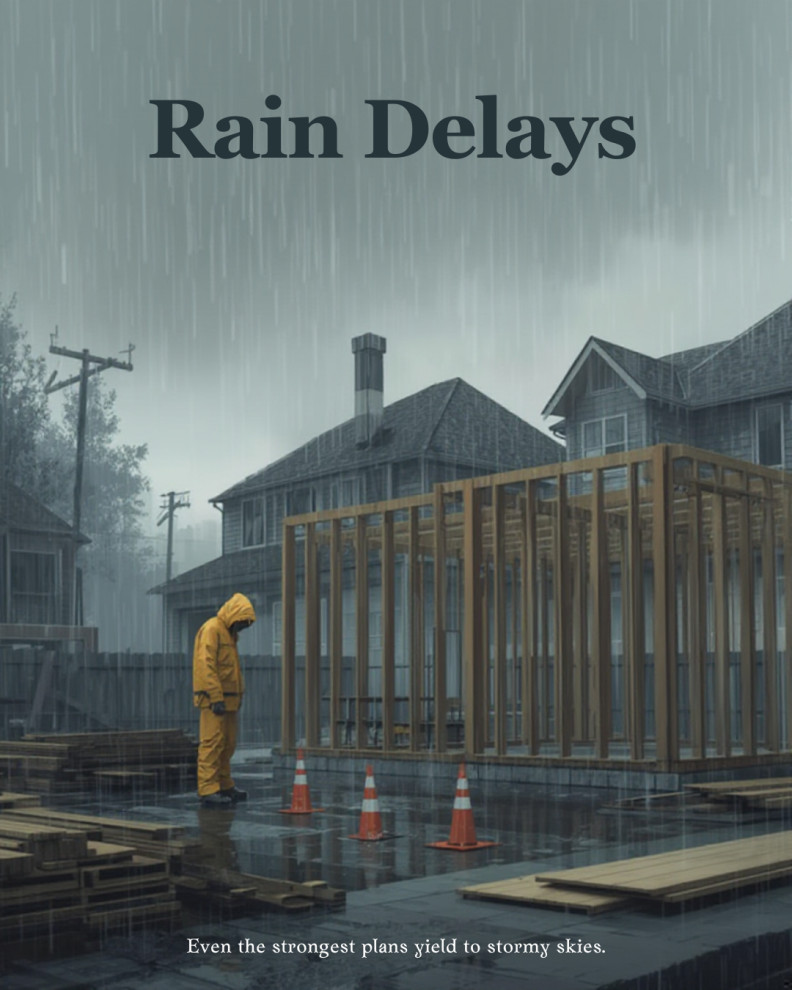
Rain is one of the biggest challenges in construction, especially in regions like Los Angeles where the rainy season can be unpredictable. While light rain may not halt all activities, moderate to heavy rain can disrupt several phases of a project.
How Rain Affects Construction
• Excavation & Foundation Work - Wet soil becomes unstable, making digging unsafe and preventing concrete from being poured.
• Concrete Pouring - Concrete needs time to cure. Excess water can weaken it, cause cracking, or ruin the finish.
• Roofing & Framing - Wood framing must remain dry to avoid warping and mold. Roofers also cannot safely work on slippery surfaces.
• Exterior Finishes - Painting, stucco, and waterproofing require dry conditions for proper adhesion.
Even one day of rain can push tasks back several days due to drying time.
3. Extreme Heat and Its Impact
High temperatures, especially during California summers, can make working conditions unsafe for crews and can impact how materials behave.
Heat-Related Delays
- Crews may need more frequent breaks to avoid heat exhaustion.
- Work hours may shift earlier to avoid afternoon temperatures.
- Some materials dry too quickly, reducing quality (e.g., concrete, plaster, paint).
Materials Affected by Heat
- Concrete: Cures too fast and may crack.
- Paint & Sealants: May dry unevenly or form bubbles.
- Roofing Materials: Can soften, making installation difficult.
Heat doesn’t usually stop construction entirely, but it can slow the pace and require schedule adjustments.
4. Wind: An Underrated but Serious Factor
High winds may not seem like a major issue, but they can cause dangerous conditions, especially when working at heights or handling large materials.
How Wind Causes Delays
- Roof installations often pause during high winds.
- Cranes and lifts cannot operate safely.
- House wrap and insulation installation becomes difficult.
- Debris can become dangerous on construction sites.
Safety standards require crews to halt work if winds exceed certain speeds.
5. Cold Weather and Moisture Concerns
While Southern California doesn’t experience extreme cold like other states, cooler temperatures and morning frost can still affect timelines.
Cold Weather Challenges
- Concrete cures slower.
- Paint, caulk, and adhesives may not adhere properly.
- Drywall mudding and stucco drying can take longer.
- Moisture from cold, damp mornings slows exterior work.
Even slight delays can add up throughout a project.
6. How Weather Affects Inspections
Most construction projects require city inspections at different phases. Bad weather can cause:
- Inspection cancellations
- Backlogs in scheduling
- Rescheduling delays that push work into the following week
Inspection availability is often out of the contractor’s control, making this a common source of project delays during stormy seasons.
7. The Domino Effect: One Delay Impacts the Next Step
Construction is a sequence of connected tasks. When one step is delayed, every step after it can also be pushed back.
For example:
- Rain delays foundation work
- Framing cannot start
- Rough plumbing and electrical are postponed
- Inspections get rescheduled
- Drywall and interior finishes move back
This “domino effect” is why contractors often communicate timeframes as ranges, not exact dates.
8. How Contractors Prepare for Weather Challenges
t Coleman Build, we take several steps to minimize the impact of weather:
Strategic Scheduling
We plan weather-sensitive tasks during historically dry months and schedule indoor tasks during wetter seasons.
Material Protection
Tarps, coverings, and temporary enclosures help protect wood, concrete, and interiors from moisture.
Flexible Work Plans
Our teams adjust hours (starting earlier or shifting tasks) when needed to keep the project moving.
Clear Communication
We keep homeowners updated when weather impacts the schedule so expectations remain realistic.
Quality Over Speed
We never rush critical tasks during bad weather just to stay on schedule. Long-term durability always takes priority.
9. What Homeowners Can Do
While you can’t control the weather, you can help the process go smoother by:
- Allowing flexibility in the schedule
- Understanding that weather delays protect your investment
- Staying in communication with your contractor
- Keeping materials and access areas clear for weather protection
Patience during weather delays ensures your finished project is safe, durable, and built to last.
Conclusion
Weather plays a major role in construction timelines, even with the best planning. Rain, extreme heat, wind, and moisture all affect materials, safety, and the progression of each phase. When you understand how weather influences your project, you can better anticipate delays and appreciate the steps taken to protect the quality of the build.
At Coleman Build, we prioritize clear communication and proper weather planning to deliver beautiful, lasting results. Whether you’re starting an ADU, remodel, or home addition, we’re here to guide you every step of the way—rain or shine.