
Building an ADU Under 500 Sq Ft? Here's How Much You'll Save in 2026
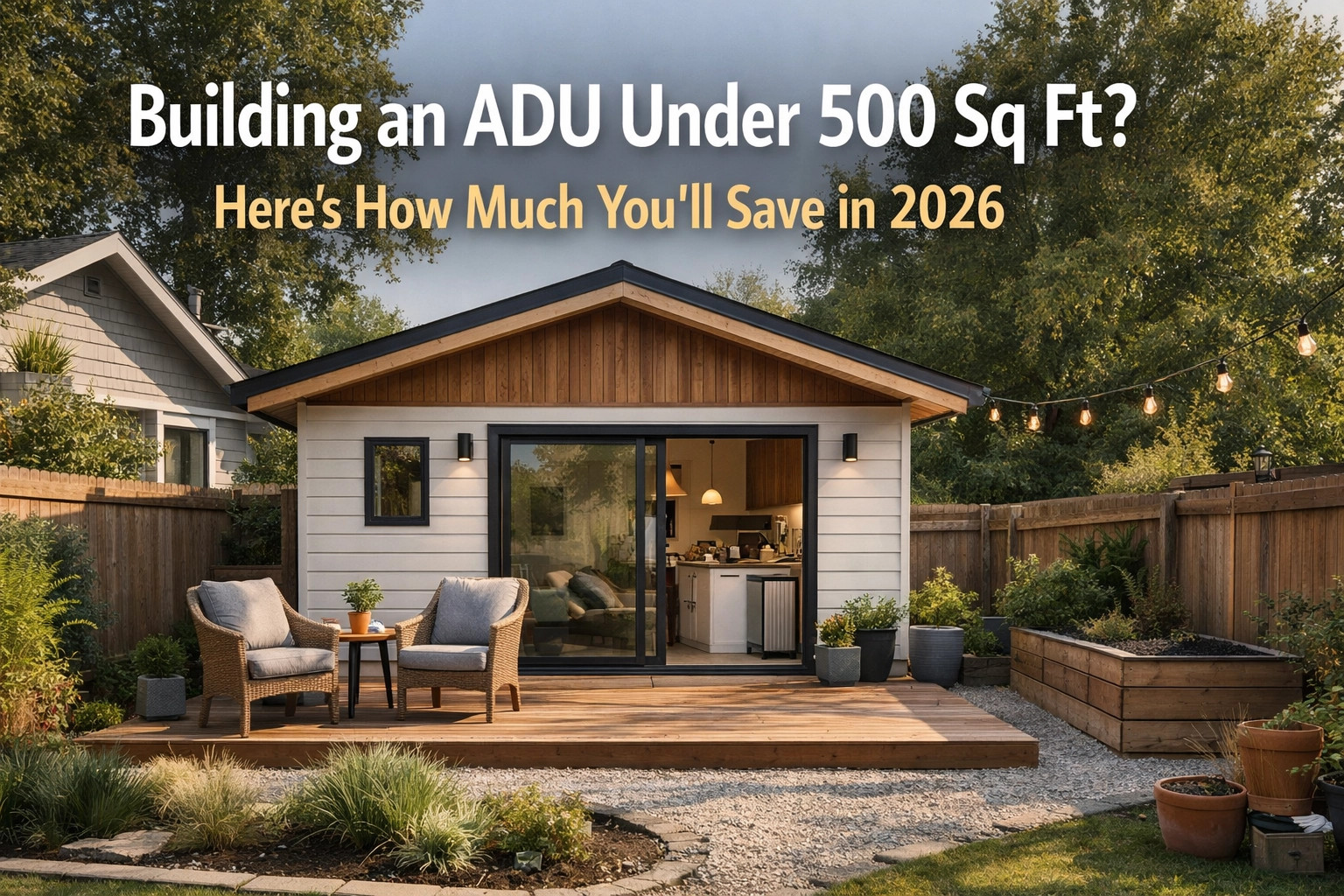
If you've been exploring ADU options in Los Angeles, you've probably heard whispers about the 500-square-foot threshold. It's not just a random number, it's a carefully calibrated sweet spot that can unlock serious savings on your project. We've helped countless homeowners navigate this decision, and we've seen firsthand how staying under 500 square feet can transform an ADU from a stretch investment into a genuinely affordable addition.
Let's walk through exactly what you'll save and why this size might be the smartest move for your property in 2026.
The "Magic" 500 Square Foot Threshold Explained
California's ADU laws have evolved to encourage homeowners to add housing without breaking the bank. The 500-square-foot mark serves as a dividing line for several cost-saving benefits. When you keep your ADU under this size, you're not just building smaller, you're accessing a tier of exemptions and reduced requirements that can save you thousands.
This threshold applies to both Junior ADUs (converted from existing interior space) and small detached units. State law recognizes that these compact homes require less infrastructure impact and deserve regulatory relief. Your local building department processes these projects differently, often with streamlined approval timelines and fewer fees.
Impact Fee Exemptions That Add Up Fast
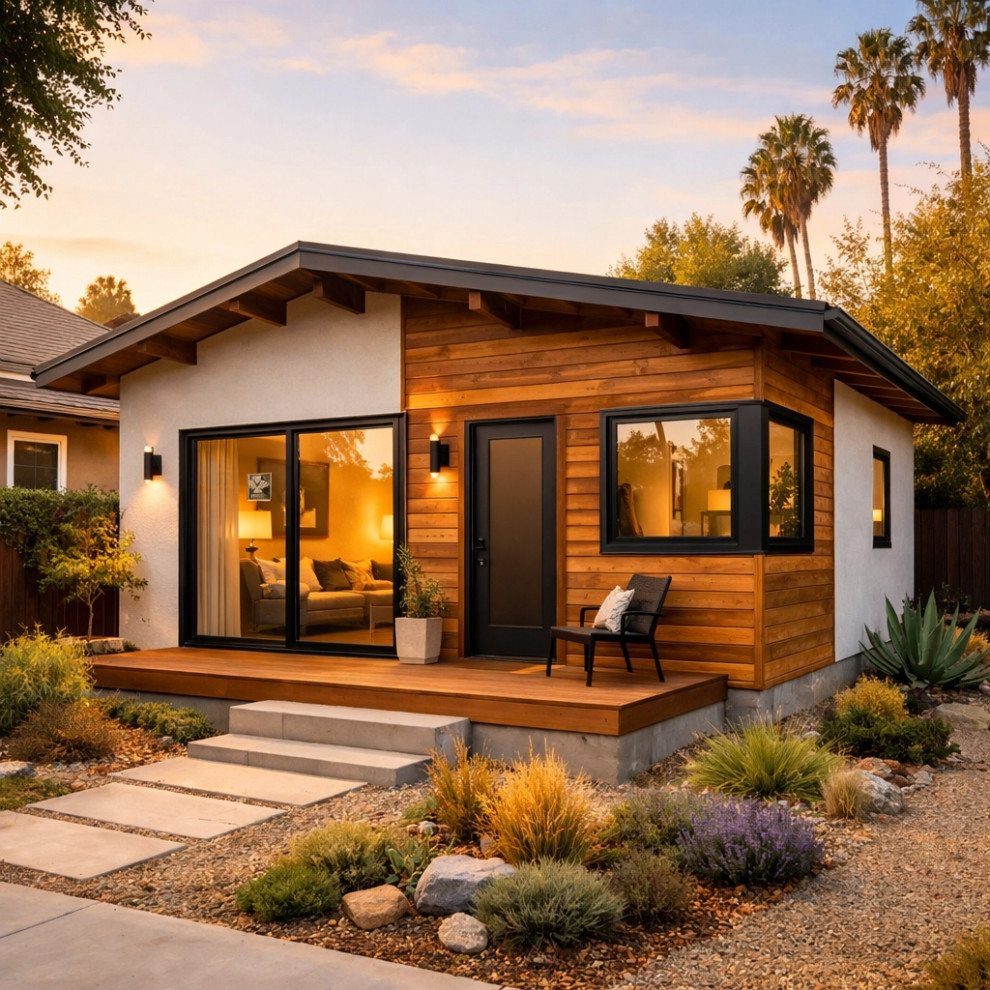
Here's where the savings get real. Under California state law, ADUs under 750 square feet are exempt from impact fees in most jurisdictions, but staying under 500 square feet often qualifies you for additional local fee waivers that larger units don't receive.
Impact fees cover things like schools, parks, water systems, and transportation infrastructure. For a typical Los Angeles ADU, these fees can range from $10,000 to $30,000 or more depending on your neighborhood. When you stay under 500 square feet, many municipalities waive these entirely or reduce them to nominal amounts.
We recently worked with a homeowner in Mar Vista who saved $18,500 in impact fees by designing their detached ADU at 495 square feet instead of 550. That's money that went straight back into higher-quality finishes and a beautiful outdoor patio instead of bureaucratic charges.
Beyond impact fees, smaller ADUs often qualify for reduced utility connection fees. Water and sewer hookup costs scale with projected usage, and a compact unit demonstrates lower demand on city systems.
Construction Costs: Smaller Means Smarter Spending
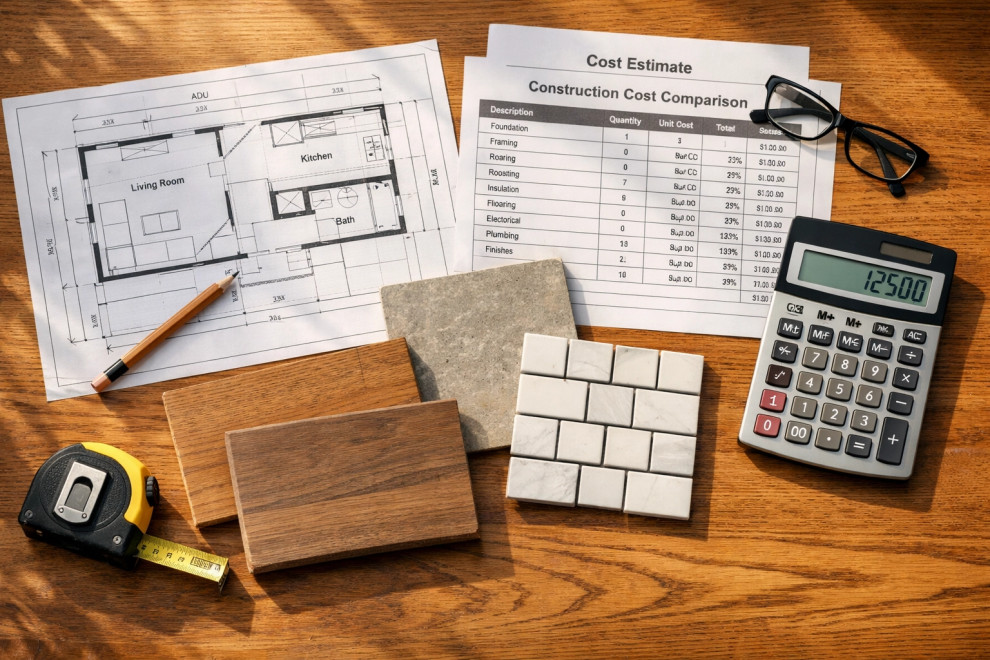
The most obvious savings come from the construction itself. Building an ADU under 500 square feet in Los Angeles typically costs between $60,000 and $150,000, positioning it at the accessible end of the ADU cost spectrum.
When you calculate cost per square foot, usually $150 to $300 in our market, a 500-square-foot unit lands between $75,000 and $150,000 for new construction. Compare that to a 750-square-foot ADU at $112,500 to $225,000, and you're looking at potential savings of $37,500 to $75,000.
The math gets even better if you're converting existing space. Garage conversions and basement conversions for units under 500 square feet typically run $60,000 to $120,000 because you're leveraging existing walls, foundation, and roof structure. You're paying primarily for interior finishing, utility connections, and code compliance upgrades rather than building from scratch.
Cost-Saving Strategies for Compact ADUs
We've found several approaches that maximize value on smaller projects:
- Prefabricated and modular designs can reduce costs by 15-20% compared to stick-built construction. These units arrive largely complete and install in days rather than months.
- Simple, rectangular footprints minimize material waste and reduce labor complexity. Every corner, angle, and custom detail adds expense.
- Shared utility runs with your main house eliminate the need for separate trenching, meter installations, and service connections. This alone can save $5,000 to $15,000.
- Standard materials and fixtures rather than custom or imported options keep your budget predictable and avoid lengthy lead times.
One strategy we particularly recommend: allocate 10-15% of your budget as a contingency buffer. Smaller projects have less room for error, but they also resolve surprises faster and less expensively than large builds.
Title 24 Compliance Made Easier
California's Title 24 energy code requirements apply to all new ADUs, but compliance costs scale dramatically with square footage. A smaller ADU under 500 square feet requires less insulation material, fewer windows, and smaller HVAC systems to meet efficiency standards.
The 2026 Title 24 updates emphasize heat pump technology and improved building envelopes. For a 500-square-foot ADU, a single mini-split heat pump system typically handles both heating and cooling efficiently, often for $3,000 to $6,000 installed. A larger unit might require multiple zones or a more complex system that doubles or triples that cost.
Energy modeling and documentation for Title 24 compliance also run more affordably on compact projects. Your energy consultant has less space to analyze and fewer systems to model, which translates to lower engineering fees.
Maximum Function in Minimal Square Footage
You might wonder whether 500 square feet provides enough livable space. We've designed dozens of these units, and the answer is absolutely yes: with thoughtful planning.
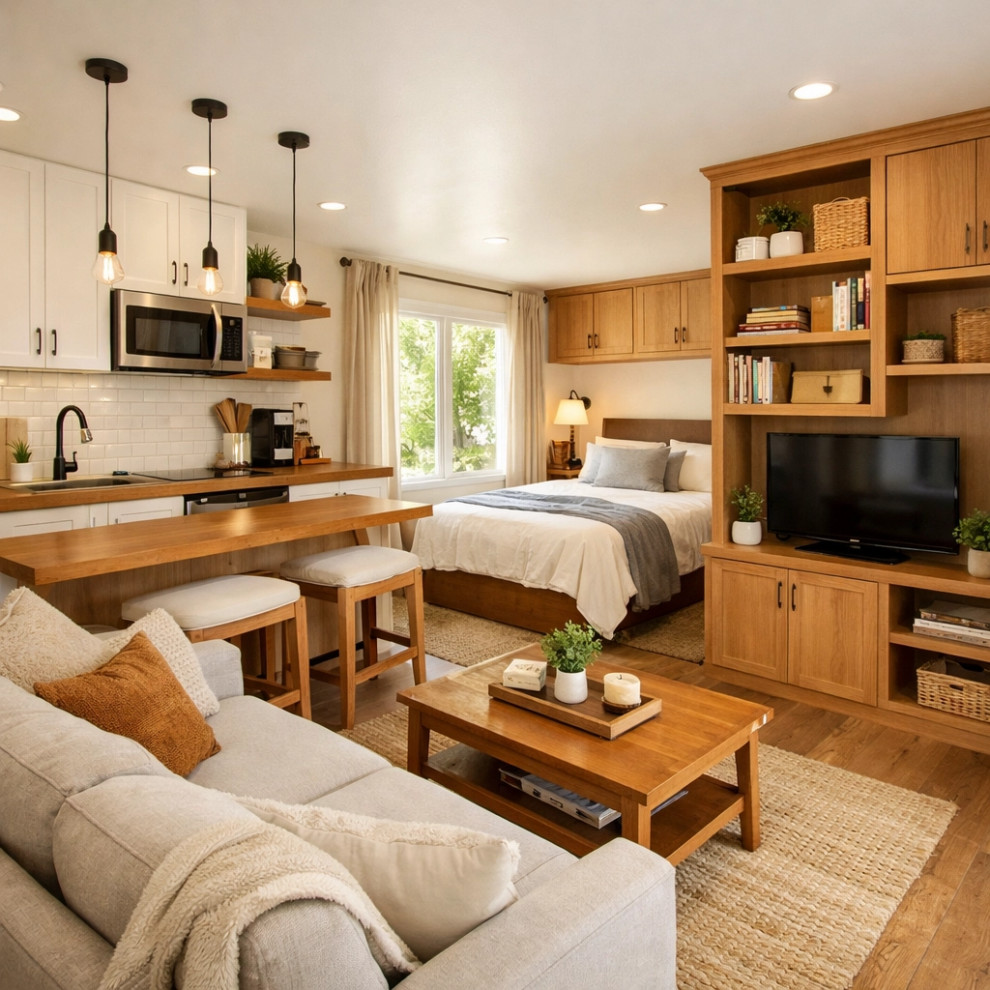
A well-designed 500-square-foot ADU comfortably accommodates a bedroom, full bathroom, kitchen, and living area. Think of it as a generous studio or a compact one-bedroom layout. The key lies in efficient space planning, built-in storage, and multi-functional furniture.
These units excel as:
- Guest houses for visiting family without giving up your main home's privacy
- Rental income generators that attract tenants looking for affordable, quality housing in desirable neighborhoods
- Home offices with a separate entrance and all-day comfort
- Aging-in-place solutions for elderly parents who want independence with family nearby
- Teen or young adult spaces that provide autonomy while keeping everyone on the same property
The rental income potential shouldn't be overlooked. A 500-square-foot ADU in Los Angeles can command $1,500 to $2,500 per month depending on location and finishes. With lower construction costs, your return on investment timeline shortens considerably compared to larger units.
Permitting and Timeline Advantages
Smaller ADUs move through the permitting process more smoothly. Los Angeles building departments often process applications for units under 500 square feet faster because they present fewer zoning concerns and require less intensive plan review.
California's ADU laws now mandate that most ADU applications be approved or denied within 60 days. In practice, simpler projects with smaller footprints face fewer correction cycles and approval delays. We've seen 500-square-foot ADU permits approved in 45-75 days, while larger, more complex units can stretch to 90-120 days or more.
Construction time scales similarly. A prefab ADU under 500 square feet might install in 2-3 months from permit to certificate of occupancy. A custom-built version typically takes 4-6 months. Larger ADUs often require 6-12 months of construction time, extending your carrying costs and delaying potential rental income.
Where Coleman Build Makes the Difference
We've built our reputation on making every detail matter, and that philosophy truly shines in compact ADU projects. When you're working with 500 square feet, each design decision carries extra weight. There's no room for wasted space or inefficient layouts.
Our team specializes in maximizing functionality within size constraints. We've developed space-planning strategies that make 500 square feet feel spacious and welcoming rather than cramped. Thoughtful ceiling heights, strategic window placement, and integrated storage solutions transform compact footprints into genuinely desirable living spaces.
We also navigate the cost-benefit analysis with you. Sometimes staying under 500 square feet makes perfect financial sense. Other times, adding 50 square feet unlocks a better layout or improved resale value that justifies slightly higher costs. We walk through those tradeoffs honestly, with detailed cost projections for each scenario.
Our relationships with local building departments and our experience with Los Angeles-specific requirements mean fewer surprises and smoother approvals. We know which details matter most to plan checkers and how to design for expedited review.
Making Your Decision
Building an ADU under 500 square feet in 2026 offers a compelling value proposition. Between impact fee exemptions, lower construction costs, reduced utility expenses, and faster timelines, you're looking at potential savings of $20,000 to $50,000 compared to slightly larger units.
These compact ADUs serve real housing needs without requiring you to take on massive debt or complex construction projects. They add value to your property, generate rental income, and provide flexible living space that adapts as your needs change over the years.
The key question isn't whether 500 square feet is enough: it's whether you're ready to create something intentional, efficient, and genuinely valuable on your property. We've seen these smaller ADUs transform how families use their homes and provide financial returns that exceed expectations.
If you're considering an ADU project and want to explore whether the 500-square-foot threshold makes sense for your specific property and goals, reach out to our team. We'll walk your lot, discuss your vision, and provide honest guidance on the approach that serves you best. Sometimes smaller really is better: and smarter.