
ADU Financing in LA: 5 Ways to Fund Your Project Without Draining Savings (2026 Options)
You've decided to build an ADU on your Los Angeles property: whether it's for rental income, multigenerational living, or simply adding value to your home. The vision is clear. The challenge? Figuring out how to pay for it without depleting your life savings.
We hear this concern from homeowners constantly. ADU projects in LA can range from $150,000 to well over $300,000 depending on size, finishes, and site conditions. That's a significant investment, and most families need a smart financing strategy to make it happen.
The good news is that ADU financing options have expanded considerably in 2026. Between government incentives, creative loan products, and equity-based solutions, there are more pathways than ever to fund your project responsibly. Let's walk through the five most practical options available to LA homeowners right now.
1. Home Equity Lines of Credit (HELOCs) and Home Equity Loans
If you've built up substantial equity in your home, tapping into it may be your most straightforward option for ADU financing in Los Angeles. Home equity financing remains the most common pathway for ADU projects across California: and for good reason.
Here's how it works: lenders typically allow you to borrow up to 80-90% of your home's loan-to-value ratio. For example, if your LA home is valued at $700,000 and you still owe $400,000 on your mortgage, you might access roughly $160,000 in equity under standard lending guidelines.
The distinction between a HELOC and a home equity loan comes down to flexibility. A HELOC functions like a credit line: you draw what you need when you need it, and you only pay interest on what you've borrowed. This can be particularly useful during construction when expenses don't hit all at once. A home equity loan, on the other hand, provides a lump sum upfront with a fixed interest rate and predictable monthly payments.
Both options offer relatively competitive interest rates since your home serves as collateral. We often recommend this route to homeowners with strong existing equity who want straightforward access to capital without navigating complex loan programs.
2. California Housing Finance Agency (CalHFA) ADU Grant
This is one of the most valuable resources available right now: and one that many LA homeowners don't even know exists. The CalHFA ADU grant program offers up to $40,000 to help cover pre-development and non-recurring closing costs.
What does that include? Think permits, architectural plans, impact fees, engineering reports, and other upfront expenses that can quickly add up before construction even begins. These are the costs that often catch homeowners off guard, so having grant funding specifically designated for them can be a game-changer.
There are income limits and eligibility requirements you'll need to meet, and the application process requires documentation including income verification, proof of property ownership, and preliminary ADU plans. Our advice? Apply early. Grant funds are limited, and programs like this tend to run out faster than anticipated.
Even if the $40,000 doesn't cover your entire project, it can significantly reduce the amount you need to borrow elsewhere: making your overall ADU loan options more manageable.
3. LA County ADU Pilot Programs and Forgivable Loans
Los Angeles County has launched innovative pilot programs designed to accelerate ADU development while addressing the region's housing crisis. The most notable offering provides up to $75,000 in forgivable loans to qualifying homeowners in unincorporated LA County areas.
Here's the tradeoff: in exchange for the funding, you agree to rent your ADU to tenants transitioning out of homelessness for a minimum of 10 years at affordable rates. If you meet the program requirements throughout that period, the loan is entirely forgiven: meaning you never have to repay it.
This option isn't for everyone. It requires a long-term commitment and a willingness to participate in supportive housing initiatives. But for homeowners who are already planning to rent their ADU and want to contribute meaningfully to LA's housing challenges, it's an extraordinary opportunity that essentially eliminates repayment obligations.
Additionally, the LA ADU Accelerator Program operates as a resource hub for homeowners interested in renting ADUs to older adults as affordable housing. These programs often come with additional support, education, and streamlined permitting processes that can save you time and money beyond just the financing itself.
4. FHA 203(k) and Fannie Mae Homestyle Loans with ADU Rental Income
The lending landscape has shifted considerably in favor of ADU construction. Both the Federal Housing Administration and Fannie Mae have expanded their loan programs to recognize ADU rental income as part of the underwriting process.
Specifically, FHA and its partner lenders now allow up to 75% of an ADU's projected rental income to count toward your qualifying income when applying for financing. This is significant: it means lenders acknowledge the income-generating potential of your ADU from the start, making it easier to qualify for larger loan amounts.
The FHA 203(k) Rehabilitation Loan and Fannie Mae's HomeStyle loan are particularly well-suited for ADU projects. These products allow you to finance both a home purchase and renovation costs in a single loan, or to refinance your existing mortgage while rolling in the ADU construction expenses.
You may be able to borrow up to 97% of your home's value, and in some cases, up to 75% of the additional value added by the ADU: though specific loan limits vary by location and property type. Given that ADUs in Los Angeles typically rent for $1,900 to $2,300 or more per month depending on size and location, that rental income projection can substantially strengthen your loan application.
5. Construction-to-Permanent Loans
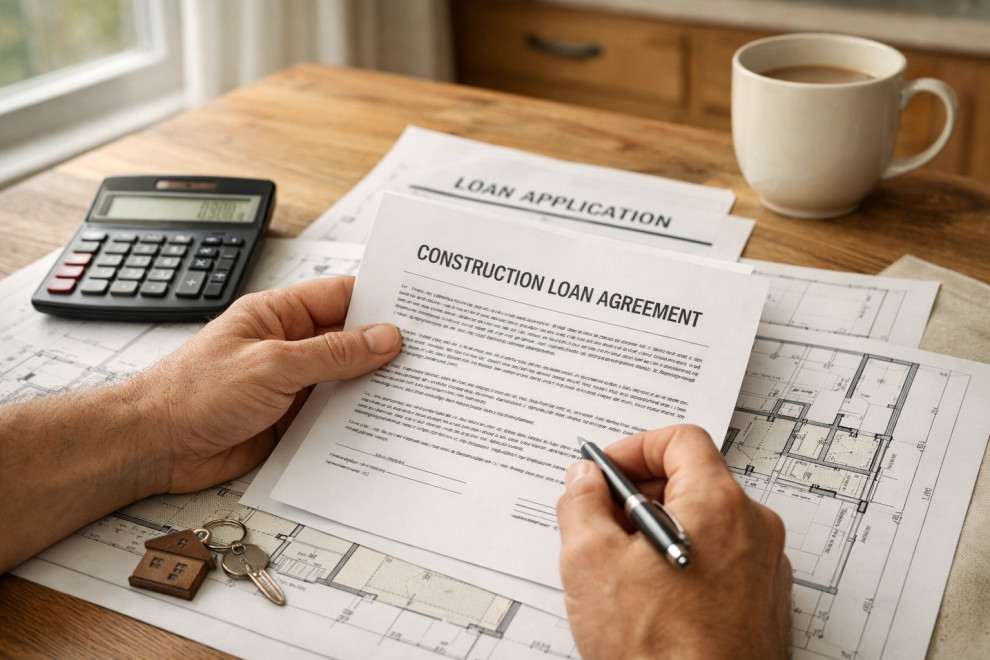
If you're building a new detached ADU from the ground up, a construction-to-permanent loan might be your best fit. These specialized loans are designed specifically for new construction projects and offer a streamlined approach that eliminates the need to secure separate financing for the build phase and the permanent mortgage.
Here's how it works: the loan covers your full project costs during construction, disbursing funds in stages as your ADU takes shape. Once construction is complete and the final inspection passes, the loan automatically converts to a traditional permanent mortgage: no second closing, no additional fees, no refinancing headaches.
This type of financing has become increasingly accessible in 2026, particularly when combined with the rental income qualification changes we mentioned earlier. If you're planning to use your ADU's rental revenue to help support the loan payments, lenders are now far more willing to factor that into their approval process.
We've worked with several homeowners who've used construction-to-permanent loans for their ADU projects, and the feedback is consistently positive. The single-closing structure saves money and simplifies what can otherwise be a complicated financing journey.
Making Your Decision: Practical Considerations
Choosing the right ADU financing option comes down to your specific circumstances. Consider your current equity position, income level, long-term plans for the ADU, and comfort level with various loan structures.
Homeowners with substantial equity often find HELOCs or home equity loans most appealing for their simplicity and competitive rates. Those who qualify for grants or forgivable loan programs should absolutely explore those avenues first: free money is always the best money. And if you're purchasing a property or planning a ground-up build, the specialized FHA, Fannie Mae, or construction loan products may offer the most comprehensive solution.
It's also worth noting that many LA homeowners combine multiple financing sources. You might use a CalHFA grant to cover pre-development costs, then tap into a HELOC for construction expenses. Or you could pursue an LA County forgivable loan while supplementing with personal savings for upgrades and finishes.
Don't overlook local incentives either. Various Los Angeles city programs offer fee waivers, expedited permitting, and other cost-saving measures that can reduce your overall financing needs. These may not be loan products themselves, but they can save you thousands of dollars that would otherwise come out of your project budget.
Moving Forward with Confidence
Building an ADU is one of the most valuable investments you can make in your Los Angeles property. The right financing strategy ensures you can complete your project without compromising your financial stability or draining resources you've worked hard to build.
We encourage you to explore multiple options, compare rates and terms, and consult with both lenders and experienced ADU contractors who understand the LA market. The landscape of how to pay for an ADU has never been more favorable, with programs specifically designed to make these projects accessible to more homeowners.
At COLEMAN BUILD LLC, we've guided dozens of LA families through the ADU process: from initial concept and financing guidance through final construction and inspection. We understand that the financial piece can feel overwhelming, but with the right information and support, it becomes manageable.
Your ADU project is within reach. The financing solutions exist. Now it's about matching the right option to your unique situation and taking that first confident step forward.