
2026 California ADU Laws: 7 Changes LA Homeowners Need to Know

If you've been thinking about adding an Accessory Dwelling Unit to your Los Angeles property, 2026 might just be your year. California lawmakers have been busy making it easier, and more financially attractive, for homeowners like you to build ADUs. But with new opportunities come new rules to navigate.
Whether you're considering a garage conversion, a detached backyard unit, or a junior ADU carved out of your existing home, understanding the latest 2026 California ADU laws is essential before you break ground. We've been tracking these changes closely at Coleman Build, and we're here to walk you through the seven most significant updates affecting LA homeowners this year.
1. Streamlined Permitting Processes in Los Angeles
One of the most frustrating aspects of building an ADU has historically been the permitting timeline. Good news: California has tightened the screws on local agencies to speed things up considerably.
As of January 2026, if a local agency fails to issue a completeness determination for your ADU application within 15 days, your application is automatically deemed complete. This prevents bureaucratic delays from stalling your project before it even begins.
For LA homeowners in the coastal zone, AB 462 represents a game-changer. Coastal development permit applications for ADUs must now be approved or denied within 60 days, a timeline that previously didn't apply to these areas. Even better, CDP decisions for ADUs can no longer be appealed to the California Coastal Commission, which means fewer hurdles between you and your finished unit.
The California Coastal Commission will provide additional guidance by July 1, 2026, to help homeowners navigate complex permitting situations in these zones.

2. Changes to Setback Requirements
Setback requirements, the minimum distance your ADU must sit from property lines, have long been a barrier for homeowners with smaller or unusually shaped lots. The 2026 Los Angeles ADU regulations continue to honor the state's relaxed setback standards.
Here's what you can typically expect:
- Rear and side setbacks of just 4 feet for detached ADUs
- No setback requirements for converted structures like garages that already exist within the setback zone
- Zero rear setback in some cases for ADUs built above existing garages
These flexible requirements mean that even if you thought your lot was too small or awkwardly configured for an ADU, you may have more options than you realized. Every lot is different, though, so we always recommend a thorough site assessment before making assumptions.
3. Updated Rules on Multi-Family Property ADUs (SB 1211)
If you own a duplex, triplex, or other multi-family property in Los Angeles, SB 1211 has opened new doors for you. This legislation expands ADU opportunities on multi-family lots, allowing for greater density without the red tape that previously made these projects prohibitive.
Under the updated rules, multi-family property owners can now add ADUs more easily, potentially one for each existing unit on the property, depending on local zoning. This is particularly relevant for LA homeowners looking to maximize rental income or create housing for extended family members.
The law also clarifies how different ADU types can be combined on a single lot. Thanks to SB 543, you can now pair a converted ADU, a junior ADU (JADU), and a detached ADU on the same single-family property. Previously, there was confusion about whether mixing ADU types was permitted. That ambiguity is now resolved.
4. The Ability to Sell ADUs Separately (AB 1033 Adoption Updates)
Perhaps the most talked-about change in recent years has been AB 1033, which allows homeowners to sell their ADU separately from the main house, essentially creating a new form of homeownership in California.
As of 2026, this law is gaining traction, though it requires local jurisdictions to opt in. Several LA-area cities are actively considering adoption, and we expect more announcements throughout the year. If your city adopts AB 1033, you could potentially:
- Sell your ADU as a standalone condo-style unit
- Retain ownership of your primary residence while transferring ADU ownership
- Offer affordable homeownership opportunities to buyers priced out of the traditional market
This represents a significant shift in how we think about Accessory Dwelling Units, not just as rental properties, but as legitimate entry points into homeownership. Keep an eye on your local city council for updates on AB 1033 adoption in your area.
5. Parking Requirement Exemptions Near Transit
Parking has always been a sticking point for ADU projects. Where do you put an extra car when you're building a unit in your backyard or converting your garage?
California law continues to exempt ADUs from additional parking requirements when they're located:
- Within one-half mile of public transit
- Within an architecturally and historically significant historic district
- On a lot where the ADU is part of an existing primary residence or accessory structure
- In an area where on-street parking permits are required but not offered to ADU occupants
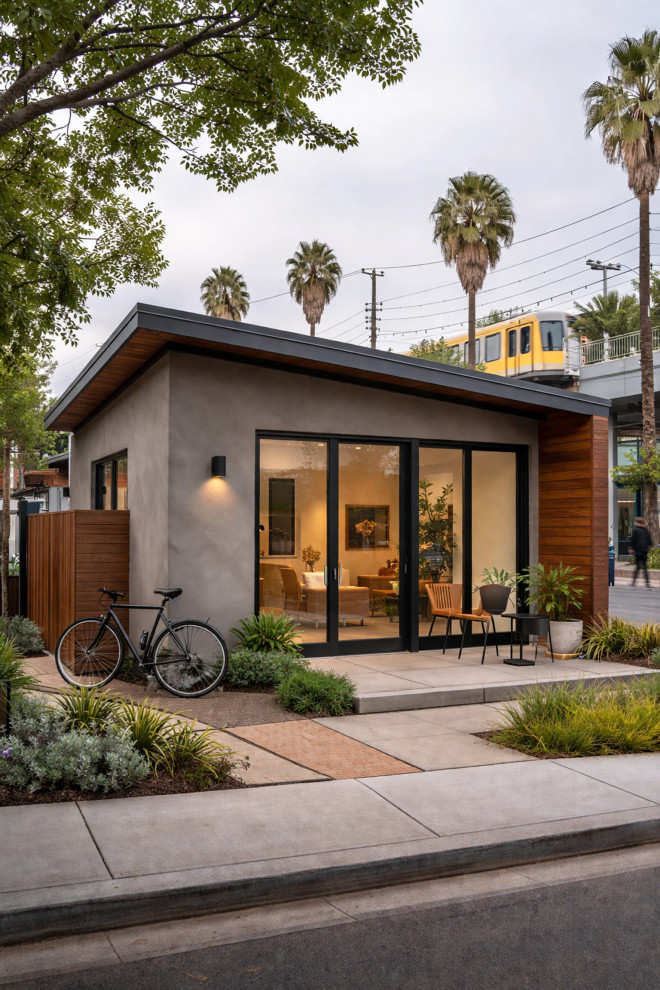
For many Los Angeles neighborhoods, especially those near Metro stations, bus lines, or in urban cores, this means you can build your ADU without adding any new parking spaces. Given LA's push toward transit-oriented development, this exemption applies to a significant portion of the city.
6. New Incentives for Affordable ADU Housing
California is sweetening the deal for homeowners willing to rent their ADUs at below-market rates. Several state and local programs now offer financial incentives, including grants, low-interest loans, and fee waivers, for ADUs designated as affordable housing.
Key incentives to explore in 2026 include:
- CalHFA ADU Grant Program: Offers up to $40,000 for predevelopment and construction costs
- LA County ADU Accelerator Program: Provides technical assistance and potential funding for qualifying projects
- Impact fee exemptions: ADUs of 750 square feet or smaller remain exempt from development impact fees statewide
These programs can significantly offset your construction costs, making ADU development more accessible than ever. If you're open to renting to tenants at affordable rates, even for a limited period, these incentives are worth investigating.
Additionally, AB 1154 has relaxed owner-occupancy requirements for junior ADUs, giving you more flexibility in how you use and rent your property. Previously, JADUs required the owner to live on-site, but this restriction has been loosened, providing more options for property owners.
7. Impact on Property Taxes and Appraisals in 2026
One question we hear constantly: "Will building an ADU raise my property taxes?"
The short answer is yes: but probably not as much as you fear. Under Proposition 13, your existing home's assessed value remains protected. Only the new construction (your ADU) gets reassessed at current market value and added to your tax bill.
For example, if your ADU costs $150,000 to build, you might see an additional $1,500 to $2,000 per year in property taxes: a modest increase compared to the rental income potential of a well-designed unit.
SB 543 also clarified that square footage limits for ADUs and JADUs refer specifically to "interior livable space." This eliminates previous ambiguity about how maximum unit size is measured, which can affect both your design options and your property's appraised value.
When it comes to appraisals, having a permitted ADU can significantly boost your property's overall value. We've seen LA homes with ADUs appraise for $100,000 to $300,000 more than comparable properties without them: though results vary based on location, unit quality, and market conditions.
What This Means for Your ADU Project
The 2026 California ADU laws represent a continued commitment to expanding housing options across the state. For Los Angeles homeowners, these changes translate into faster approvals, more flexibility in design and placement, and new financial opportunities: whether through rental income or the potential to sell your ADU separately.
At Coleman Build, we believe every detail matters when it comes to navigating these regulations and turning your ADU vision into reality. From initial site assessments to permit applications to final construction, understanding the latest Los Angeles ADU regulations can mean the difference between a smooth project and costly delays.
Ready to explore what's possible on your property? We'd love to help you understand how these 2026 changes apply to your specific situation. Reach out to our team for a conversation about your ADU goals: no pressure, just honest guidance from people who know LA construction inside and out.
Your backyard might just be the key to your next chapter. Let's figure it out together.