
2026 California ADU Laws: 5 Big Changes That Will Speed Up Your LA Project
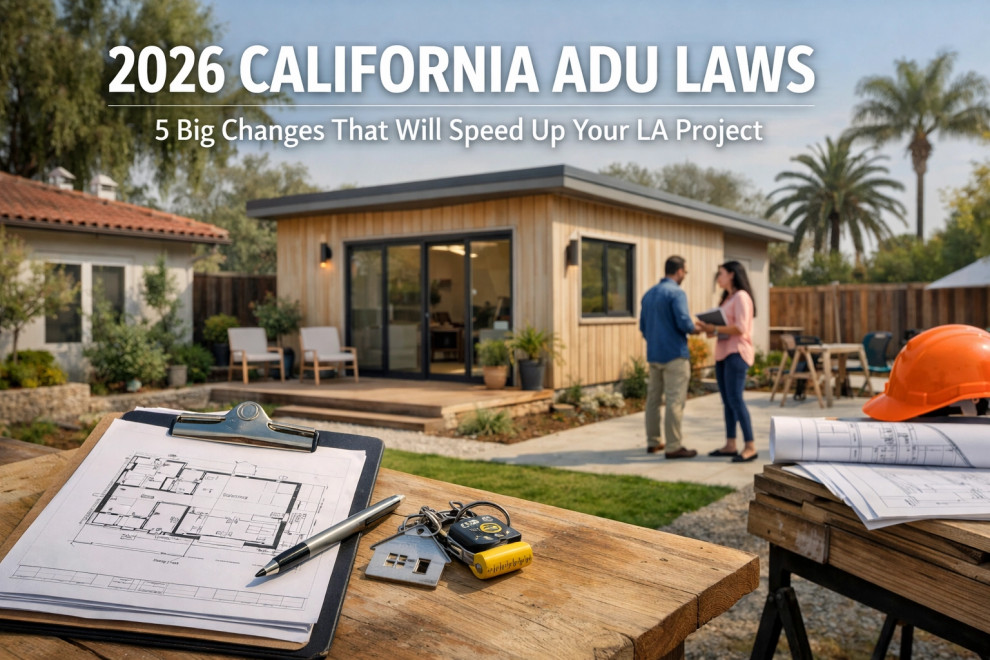
Have you ever looked at your backyard and imagined a secondary home: a quiet office, a guest suite for family, or perhaps a consistent source of rental income: only to be deterred by the legendary red tape of Los Angeles permitting? For years, the dream of building an Accessory Dwelling Unit (ADU) often felt like a marathon through a maze of shifting regulations and mounting fees. However, as we move into 2026, the landscape of residential construction in California has undergone its most significant transformation yet.
At COLEMAN BUILD LLC, we have watched these legislative shifts closely, and we can confidently say that the "ADU revolution" has finally reached its stride. The state has doubled down on its commitment to housing density by stripping away the most common roadblocks that used to stall local projects. Whether you are looking to house a returning college grad or seeking a smart investment for your property, these new laws are designed to move your project from the blueprint stage to the foundation pour faster than ever before.
In this guide, our team will walk you through the five most impactful changes in the 2026 California ADU laws and explain exactly how they benefit your Los Angeles home.
1. The 60-Day Permit Approval "Shot Clock"
Perhaps the most frustrating part of any home improvement project is the "waiting game" at the city planning office. Historically, ADU applications in Los Angeles could linger in review for months, with back-and-forth corrections stretching into the better part of a year. That changes fundamentally in 2026.
California law now mandates a strict 60-day deadline for local agencies to approve or deny a compliant ADU application. This isn’t just a suggestion: it is a hard requirement with real consequences for local municipalities. If a city fails to meet this deadline, or if they fail to submit their specific ADU ordinance to the state for oversight, that ordinance can be declared null and void. This effectively forces local jurisdictions to follow state-mandated "default" rules, which are almost always more favorable to the homeowner.
For you, this means predictability. You can now plan your financing, hire your construction services, and set a move-in date with actual confidence. By removing the indefinite waiting period, the state has effectively reduced the overall project timeline by three to five months on average.
2. Expanded Fee Exemptions: More Square Footage for Less Money
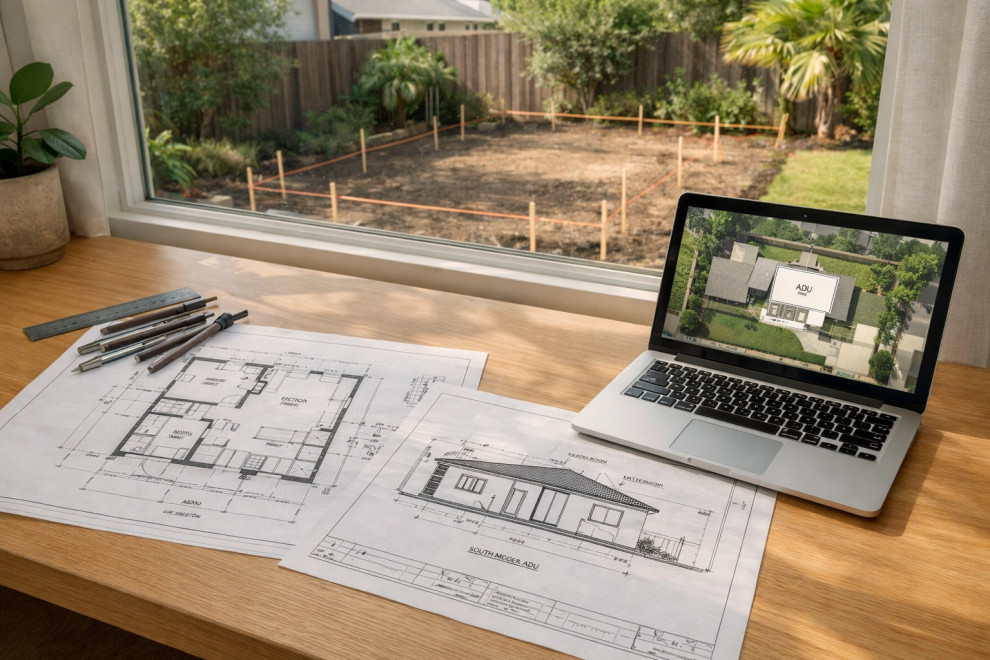
Building a home is an investment, but the "hidden" costs: development impact fees and school fees: often take homeowners by surprise. In 2026, the thresholds for these fees have been refined to favor the "mid-sized" ADU, which is often the most popular choice for LA families.
Here is how the new fee structure breaks down:
- ADUs under 500 square feet: These units are now entirely exempt from school fees. This makes the "studio" or "efficiency" ADU incredibly cost-effective.
- ADUs under 750 square feet: These remain exempt from development impact fees, saving you thousands: sometimes tens of thousands: of dollars right out of the gate.
- The "Interior Livable Space" Rule: This is a crucial clarification brought by SB 543. The law now codifies that these size thresholds only count the "interior livable space."
In the past, there was constant confusion about whether a garage, a covered porch, or a storage closet pushed you over the 750-square-foot limit. Now, we have a clear standard. You can build a thoughtful, spacious unit with a beautiful porch or an attached garage without those square feet counting toward your impact fee limit. This allows for more creative, harmonious designs without the financial penalty.
3. Permanent Removal of Owner-Occupancy Requirements
For a long time, California required homeowners to live on the property if they wanted to build or rent out an ADU. This was a significant hurdle for people who wanted to move out of their primary home but keep the property as a multi-unit rental investment.
Effective now and moving forward through 2026, AB 976 has permanently eliminated owner-occupancy requirements. You can now rent out both the primary residence and the ADU simultaneously. This change transforms the ADU from a simple "guest house" into a high-yield investment asset.
We often see clients who want to downsize into their ADU and rent out the main house, or perhaps move to a different neighborhood entirely while maintaining their LA property as a two-unit rental. This flexibility ensures that your property remains a versatile financial tool, regardless of where life takes you. If you are debating between a standard addition and an ADU, this rental flexibility is often the deciding factor. You can learn more about how this impacts your property value in our deep dive on ADU vs Home Additions.
4. Streamlined Junior ADUs (JADUs) and Sanitation
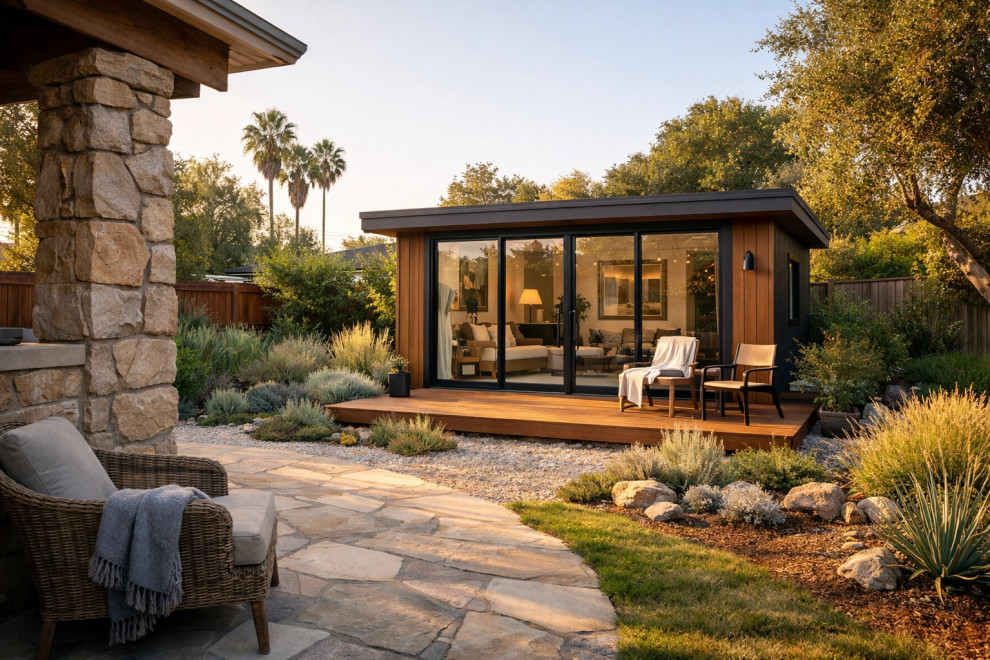
A Junior ADU (JADU) is a unit created within the walls of an existing structure: like a converted bedroom or an attached garage: and is typically limited to 500 square feet. In 2026, the rules surrounding JADUs have become even more flexible through AB 1154.
The biggest change involves sanitation facilities. If your JADU includes its own independent bathroom, the owner-occupancy requirement is waived. This is a subtle but powerful change. Previously, JADUs were almost always tied to the owner living on-site. Now, if you design the unit to be self-sufficient with its own bathroom and kitchenette, it functions much like a standard ADU in terms of rental freedom.
This is particularly useful for Los Angeles homeowners with large, underutilized master suites or attached garages. It allows for a seamless conversion that feels like a natural extension of the home while providing a completely private living space for a tenant or family member.
5. The Rise of the ADU Condo Conversion (AB 1033)
This is perhaps the most revolutionary change in California property law in decades. Under AB 1033, cities now have the option to allow homeowners to sell their ADUs separately from the main house as condominiums.
While this depends on the local municipality opting into the program, Los Angeles has been at the forefront of exploring these density solutions. This change means that instead of just being a landlord, you could potentially become a developer. You could build an ADU, go through the condo conversion process, and sell the unit as a separate piece of real estate.
This creates an entirely new "entry-level" housing market in LA. It allows homeowners to unlock the equity in their backyard without selling their entire property. While the process involves specific legal steps and map filings, the potential for wealth creation is massive. It turns your backyard into a sellable asset, providing an exit strategy that didn't exist just a few years ago.
Navigating the 2026 Landscape with COLEMAN BUILD LLC
While these laws are designed to make the process easier, building an ADU is still a complex undertaking that requires a thoughtful approach to design, engineering, and construction. Our team at COLEMAN BUILD LLC believes that the best projects are the ones where the new structure feels intentional and integrated with the original home.
When you start your project in 2026, we recommend focusing on three key areas:
- Site Feasibility: Even with new laws, utility connections and setbacks still need to be managed correctly.
- Design Integration: An ADU shouldn't look like an afterthought. Whether it’s a modern bathroom renovation for the unit or a full-scale build, the materials and style should complement your primary residence.
- Budgeting for Quality: While you save money on fees, we always suggest reinvesting those savings into high-quality finishes and energy-efficient systems to ensure long-term value.
Closing Thoughts
The 2026 California ADU laws represent a significant shift toward homeowner empowerment. With 60-day permit guarantees, expanded fee exemptions, and the ability to sell units as condos, the state has finally cleared the path for you to maximize your property's potential. These changes don't just speed up the project; they provide a level of financial and creative freedom that was previously out of reach for many.
At COLEMAN BUILD LLC, we are excited to help you navigate these new opportunities. Building an ADU is more than just adding square footage: it is about creating space for family, generating financial security, and contributing to a more sustainable housing future for Los Angeles.
If you are ready to see how these new laws apply to your specific lot, we invite you to contact us today. Let’s explore what’s possible in your backyard and start building something meaningful together.